
For executors and families
Estate and probate home sales
Selling a parent's or loved one's home is a job most people do once, while dealing with everything else a death brings. In Mississauga, Oakville and across the GTA, we take the house off your list: the valuation, the clean-out, the trades, the sale and the paperwork your lawyer needs, at a pace that suits the family.
Start here
- What's the home worth?A written evaluation from comparable sales, including a date-of-death value for the estate's filings.Open →
- What will the estate net?The sale price after commission, legal fees and any mortgage.Open →
- Ask us anything, confidentiallyProbate timing, a vacant house, siblings who disagree: one message and you'll hear back personally.Ask →
What we arrange for you
One point of contact for everything the house needs, so the executor isn't managing four trades and a listing on top of the estate.
Clean-outs
Once the family has taken what they want, we arrange for the rest to be sorted, donated, removed or disposed of.
Contractors
Repairs, painting, cleaning and anything an inspection turns up, quoted for you to approve before any work starts.
Staging
An empty or dated home furnished and presented so buyers see what it could be, not what it has been.
Out-of-town executors
We handle the home locally: access, trades, showings and regular updates, with documents signed electronically or with a lawyer where you live.
Selling an estate home, step by step
Seven steps, in the order they usually happen. The first three are worth doing in the first few weeks, even if the sale is months away.
Confirm who can sell
The estate trustee named in the will normally has the power to sell. A home owned jointly with a surviving spouse usually passes to them outside the estate; one in the deceased's sole name is sold by the estate.
Secure and insure the home
Account for every key, keep the heat on, and call the insurer straight away: many policies limit coverage once a home has been vacant for a set period, often 30 days.
Get a date-of-death value
The estate needs the home's value on the date of death for the estate administration tax return and the final income tax return. We prepare a written evaluation from comparable sales.
Probate, or confirm it isn't needed
A home in the deceased's sole name usually needs a Certificate of Appointment of Estate Trustee before closing. You can often prepare and list while it is processed, with the closing set after it.
Clear the contents
Family chooses first, from a written list everyone has seen. We arrange a clean-out for the rest: donation, removal and disposal, so the home is empty and ready.
Prepare and list
Usually a deep clean, paint and the repairs an inspector would flag, and nothing more; sometimes an as-is sale is better for the estate. We arrange contractors and staging, and give you the numbers to decide.
Close and pay the estate
Proceeds go to the estate through your lawyer, not to individual beneficiaries. Your lawyer will advise how much to hold back until the tax filings are cleared.
General information, not legal or tax advice. Your estate lawyer and accountant should confirm what applies to your estate.
Guides for executors and beneficiaries
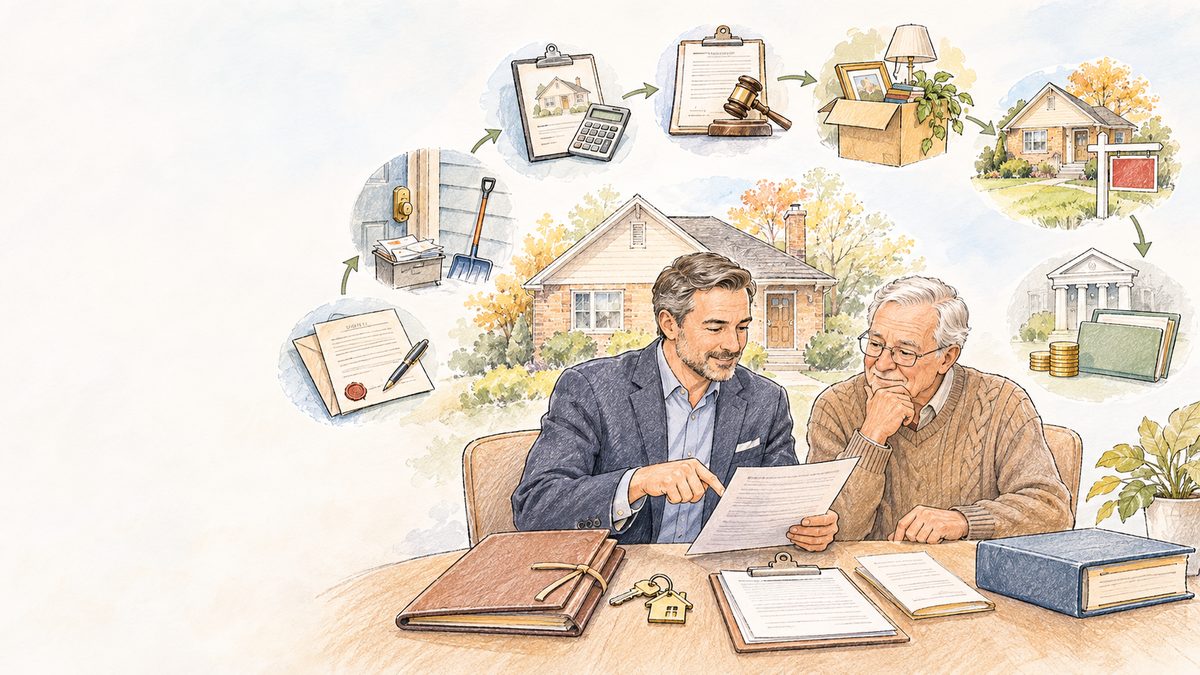
Selling a home as an executor in Ontario: A step-by-step guide
Who has the authority to sell, what to do with a vacant home, probate and timing, and how the sale…
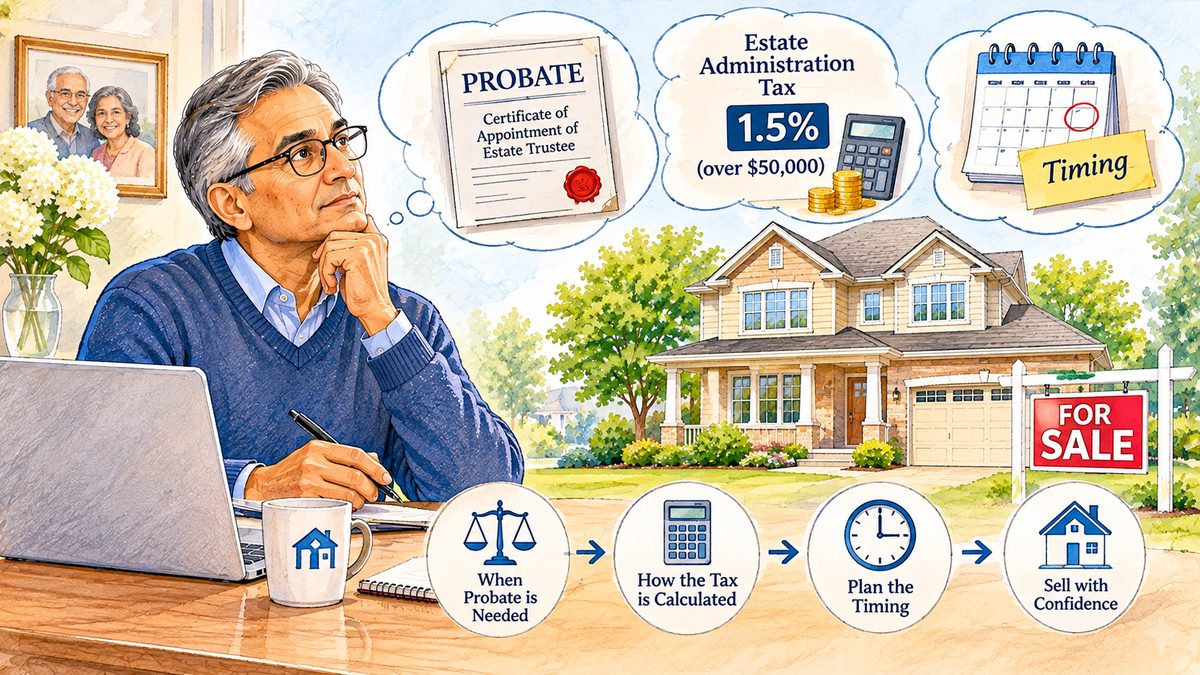
Ontario probate and estate administration tax, explained for home sales
What probate is, when a house sale needs it, how Ontario's estate administration tax is calculated, and…

Inheriting a house with siblings: Selling, buying out, and when you disagree
When several beneficiaries share a home: the options, how a buy-out works, what the executor can and…
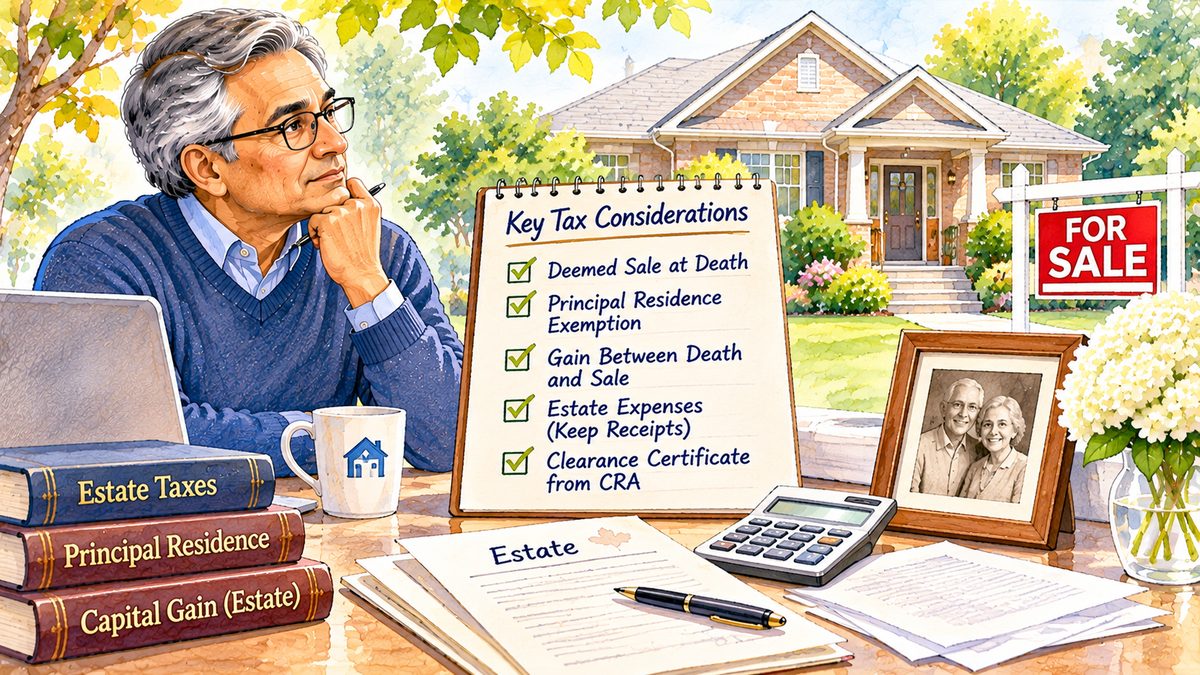
Taxes when selling an inherited home in Canada: What executors should know
The deemed sale on death, the principal residence exemption, any gain between death and the sale, and…
Tips for probate sale in real estate
What probate means in Ontario, why estate homes are often well kept but dated, and what buyers and…
What is an 'as-is' sale in real estate?
Have you ever come across a property with visible issues like a leaky roof, missing shingles, or a…
Common questions
Can I sell a house before probate is granted in Ontario?
You can usually prepare the home, list it and accept an offer while the probate application is being processed, with the closing date set after the certificate is expected. When the home is in the deceased's sole name, the sale generally can't close until the Certificate of Appointment of Estate Trustee is issued. Your estate lawyer should review the agreement.
How much is estate administration tax (probate) in Ontario?
Nothing on the first $50,000 of the estate's value, then $15 per $1,000 (1.5%) above that. An estate whose only probated asset is a $1,000,000 home would owe about $14,250. Legal fees for the application are separate.
Do all the beneficiaries have to agree to sell the house?
Usually not, if the will gives the estate trustee the power to sell. The trustee must still act fairly for all beneficiaries and get fair market value, so sharing the valuation and offers with everyone avoids most disputes. If there is a real disagreement, speak to the estate lawyer.
Can a beneficiary buy the house from the estate?
Yes, at fair market value. If that beneficiary is also the executor, the conflict of interest usually means getting the other beneficiaries' written consent or court approval. An independent written valuation helps everyone agree on the price.
Is there tax when selling an inherited home in Canada?
Canada has no inheritance tax. The deceased is treated as having sold the home at its value on the date of death, and the principal residence exemption usually covers that gain if it was their home. A gain between the date of death and the sale is generally taxable to the estate. Ask the estate's accountant.
What should I do with a vacant estate home?
Tell the insurer immediately, keep the heat and alarm on, forward the mail, and arrange regular checks, snow clearing or lawn care. Remove valuables and important papers early, ideally with other family members present.
Should we sell the estate home as-is?
Sometimes. An as-is sale saves time and spending but usually brings a lower price. Often the best result comes from a clean-out, a deep clean, paint and essential repairs. We'll show you the likely price either way so the estate can decide.